
Riverside · Generator Services
Backup Generators
Standby power sized to the circuits you actually need, from essential-load systems to portable units, installed and supported locally.
Backup Generators · Riverside
Backup Power, From Essentials To Everything
A backup generator is any machine that carries your load when the utility stops, and the useful question is not which brand but how much of the house or building you want it to carry and how automatic you want it to be. At one end there is a portable unit you roll out, start by hand and plug into a handful of appliances. In the middle, and where most of our customers land, is a permanently installed standby unit wired to an essential-circuit transfer switch: the refrigerator, the internet, some lighting, the furnace or one air conditioning system, the well pump if there is one. At the far end is a whole house generator that carries the entire service and makes an outage close to invisible. The Inland Empire makes this a practical question rather than a theoretical one. Edison runs public safety shutoffs in the wind-exposed foothills every fire season, summer heat events strain the grid across the whole valley, and both of those outages last long enough that a machine which starts itself is worth considerably more than one you have to go outside and pull-start in the dark.
Why Buy Backup Power From Us
Most of the bad backup power installations we get called out to fix were sold on a number rather than a load list. Somebody bought the generator that fit the budget, then found out during the first real outage that it could not start the air conditioner, or that the transfer switch only covered half the circuits that mattered. We start from the list of what has to keep running and work backwards to the machine, which sometimes means a smaller and cheaper unit than the customer expected and sometimes means telling them the budget does not reach. We are a licensed electrical contractor rather than a dealer with a subcontracted installer, the same people size, install and service the system, and we are local enough that when a Santa Ana event knocks out half of Corona we are already in the area.
- Essential-circuit or whole-service switching, chosen from your load list rather than from a package price.
- Automatic transfer switches installed and tested in both directions before we leave.
- Quiet enclosures and sensible exercise scheduling, which matters on close-set Eastvale and Rancho Cucamonga lots.
- Propane, natural gas and diesel, so rural properties are not pushed into a fuel that does not suit them.
- Maintenance plans that keep the warranty valid and catch the dead battery before the outage does.
- One company for install and ongoing service, so there is nobody to blame at handover.
Reasons To Put In A Backup Generator
Backup power earns its keep in fairly specific situations, and these are the ones we see most across the valley:
Planned fire-season shutoffs
A public safety power shutoff is announced in advance and then lasts as long as the wind does, which is routinely two or three days in the Corona canyons, north Rancho Cucamonga and the Redlands foothills. That is the outage that changes people from thinking about a generator to buying one.
Heat-wave grid strain
August in Moreno Valley, Perris and Fontana puts the whole system under load, and the outages arrive at the exact moment air conditioning stops being a comfort and starts being a safety issue.
A home office you cannot lose
Internet gear, a computer and one room of cooling is a small load, and covering just that is a small, affordable system rather than a whole-house one.
Small business continuity
A dental office with a sterilizer, a restaurant with walk-in refrigeration, a shop with a POS system and a gate. The critical list is usually shorter and cheaper than the owner assumes, and a modest commercial standby generator covers it.
Medical equipment at home
Oxygen, CPAP, dialysis and refrigerated medication all depend on power, and battery backup is measured in hours while an outage is measured in days.
You already own a portable and are tired of it
Dragging out a portable, filling it with gasoline in the dark and running extension cords through a window is exactly the experience that sells permanently installed standby units.
Send us the list of what has to stay on and we will tell you the smallest system that genuinely does it. Call: (951) 540-3536

How We Put A Backup System In
The design work happens before anything is ordered, which is what stops the surprises.
1. Build the critical load list
We walk the property with you and write down what must run, what would be nice, and what can wait. That list, not the square footage, sets the size of the machine and the type of transfer switch.
2. Choose fuel and location
Natural gas where there is a main, propane where there is not, diesel where the load is large. Then we find a spot that satisfies the clearances, keeps the runs short and does not put the exercise cycle under a bedroom window.
3. Install and switch
Pad, generator, fuel line, wiring and transfer switch. Power is off for a few hours while the switch goes in. We test the transfer in both directions under real load rather than just watching the engine start.
4. Commission and hand over
Exercise timer set for a sensible hour, controller settings recorded, warranty registered, and a walk-through of what the weekly self-test should sound like so you notice when it changes.
Standby, Portable, Switching And Runtime
The parts of a backup power system that people ask about most:
Standby generators
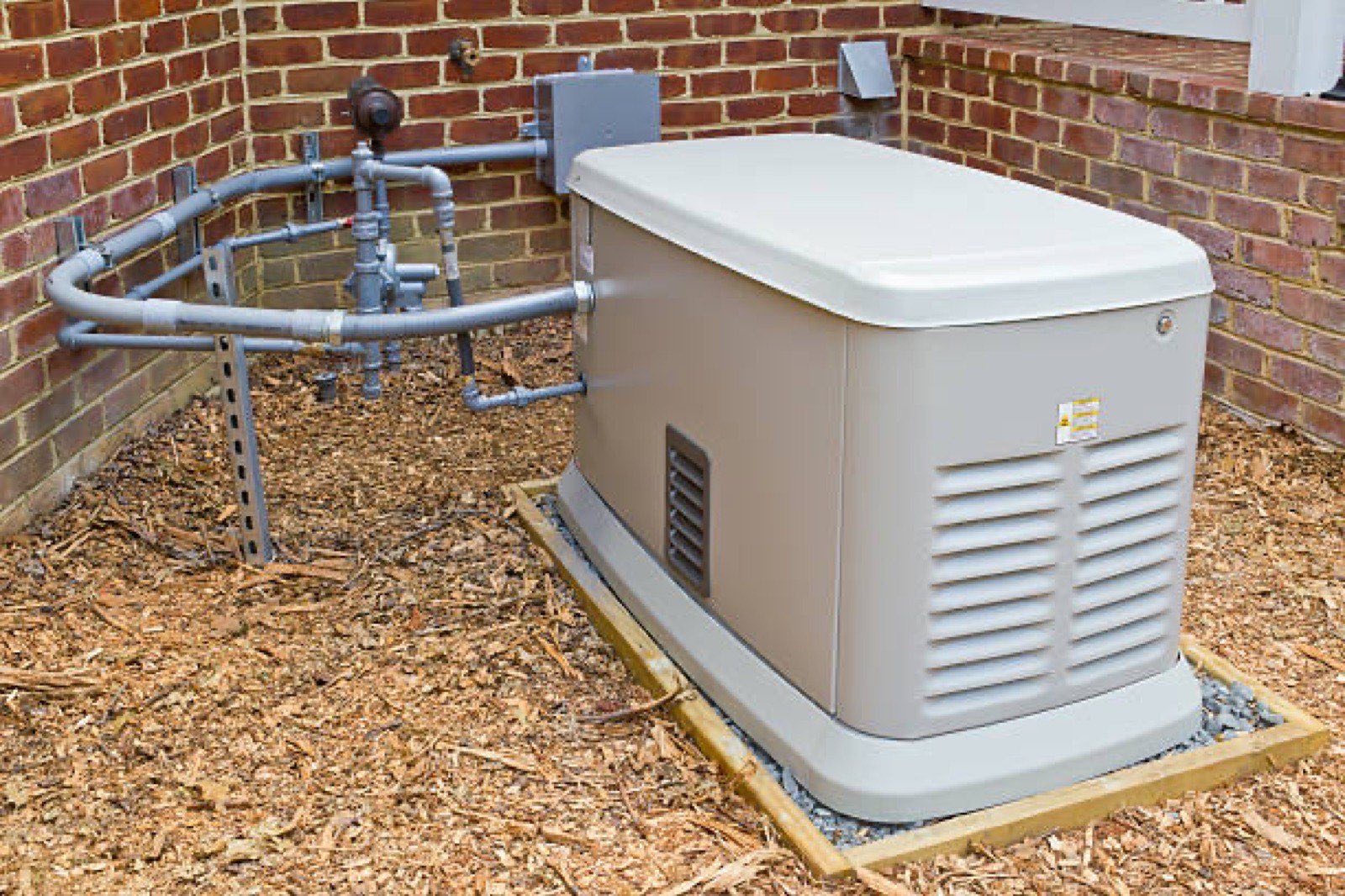
Permanently installed, permanently fuelled, automatic. They test themselves weekly, start within seconds of an outage and need no one at home. This is the category almost everybody ends up in once they have priced the alternative in inconvenience.
Portable generators
Cheaper, movable and manual. You start it, you fuel it, you run cords or use an inlet box and an interlock. Fine for occasional short outages and for a job site, poor for a multi-day fire-season shutoff. Never run one in a garage or near an open window; carbon monoxide is what makes portable units dangerous rather than the electricity.
Automatic transfer switches
The switch is what makes backup power automatic and what makes it safe. It isolates your house from the grid so the generator cannot backfeed onto lines a utility crew may be working on. Whole-service switches carry everything; essential-load switches carry a defined subpanel; load management modules shed the big items so a smaller generator can still cover the important ones.
Gas generators
Natural gas units are the standard for suburban Riverside because the fuel arrives by pipe and never needs handling. They lose a little output compared with propane or diesel at the same engine size, and they depend on a gas supply, which in practice is far more reliable than the electrical grid.
Runtime and fuel consumption
Natural gas runs as long as the utility feeds it, which is effectively indefinite. Propane depends on tank size: a 500-gallon tank at roughly half load will typically run a home standby unit for several days. Diesel depends on the base tank, which on smaller units is commonly a day or two before a delivery is needed.
Noise and neighbours
Modern residential enclosures run in the low to mid 60 decibel range at a normal distance, with larger and diesel units into the 70s. That is between a conversation and a vacuum cleaner. Placement, orientation and a midday exercise slot matter more than the last two decibels on the spec sheet.
Battery backup alongside a generator
Batteries and generators solve different problems. A battery covers the first minutes silently and rides through brief blips; a generator covers days. Plenty of Eastvale and Rancho Cucamonga homes with solar end up with both, and the two can be configured to work together rather than fight.
What Backup Power Costs
A permanently installed backup system on essential circuits typically runs from about $5,000 installed; whole-service systems for larger homes run to $15,000 and beyond. What decides where you land:
- How much you want covered. Essential circuits versus the whole service is the single biggest difference on any quote.
- Automatic or manual switching. Automatic costs more and is the reason most people buy a standby unit in the first place.
- Fuel and supply work. An existing gas main a few feet away is cheap; a propane tank, a long run or a meter upgrade is not.
- Panel condition. Older Riverside, San Bernardino and Redlands homes often need panel work before a modern system can go in.
- Noise requirements. Quieter enclosures and better siting cost a little more and are worth it on close-set lots.
- Ongoing service. A maintenance plan is a few hundred dollars a year and is what keeps the warranty and the reliability intact.
We quote fixed, including permit and startup. If the load list turns out to be bigger than a residential machine can handle, we will say so and price it as a commercial system instead; if you only need power for a few weeks, a rental unit is cheaper than anything permanent. Everything we install and rent is listed on our Riverside generator services page.
Frequently Asked Questions
What is the difference between a portable and a standby generator?
A portable generator is a movable machine you start by hand, refuel by hand and connect either with extension cords or through an inlet box and interlock. It is cheaper to buy and much more work to use. A standby generator is permanently installed outside, permanently connected to natural gas or propane, wired to an automatic transfer switch, and it starts itself within seconds of an outage whether or not anybody is home. It also tests itself weekly. For a short blip a portable is fine. For a multi-day fire-season shutoff, standby is the only one people are still happy with on day three.
What is an automatic transfer switch and do I need one?
It is the device that sits between the utility and your panel. It watches the incoming supply, and when the utility fails it signals the generator to start, waits for it to stabilise, then transfers your circuits across. When utility power returns it transfers back and shuts the generator down. Critically, it also isolates your system from the grid so your generator cannot backfeed onto lines a repair crew may be touching, which is both a safety requirement and a code one. If you want automatic operation, you need one. Manual transfer switches are cheaper and require somebody to be home and awake.
How loud is a backup generator?
Residential standby units in modern enclosures generally run around 60 to 70 decibels measured at the distance manufacturers quote, which is somewhere between a normal conversation and a vacuum cleaner in the next room. Larger commercial and diesel units are louder, and sound-attenuated enclosures are available where that matters. In practice, placement and orientation change the experience more than the rated number, and the weekly exercise cycle is the only time most neighbours would ever hear it, which is why we schedule it for the middle of a weekday.
How long will a generator run during an outage?
On natural gas, as long as the outage lasts, because the fuel keeps arriving by pipe. On propane, it depends on the tank: a 500-gallon tank at around half load will typically carry a home standby unit for several days, and a 250-gallon tank for roughly half that. On diesel, it depends on the base tank, which on smaller standby units is often 24 to 48 hours before a delivery is needed, and on larger commercial units can be sized for whatever runtime the site requires. We size fuel storage to the outage you are actually preparing for.
Can a generator power my air conditioning?
Yes, but the compressor start is what sets the size. An air conditioner draws several times its running current for the first second or two, and that surge is the number the generator has to handle. One five-ton system is comfortable on a 22kW unit; two systems starting together usually want 24kW to 26kW or a load management module that staggers them. A soft-start kit on the condenser reduces the surge substantially and can save a whole size step on the generator, which normally more than pays for itself.
Will a generator work with my solar system?
Yes, though they do not automatically cooperate. Most grid-tied solar shuts down during an outage for safety, so panels alone leave you dark. A generator can be integrated alongside solar and battery storage, with the transfer switch and the inverter configured so the systems hand over cleanly rather than fighting each other. This is common on the newer Eastvale and Rancho Cucamonga homes, and it needs designing at the start rather than bolting together afterwards.
Need a generator in Riverside?
Tell us what has to keep running and where it is, and we will come back the same day with a free estimate and a fixed price.
Or call us now: (951) 540-3536